
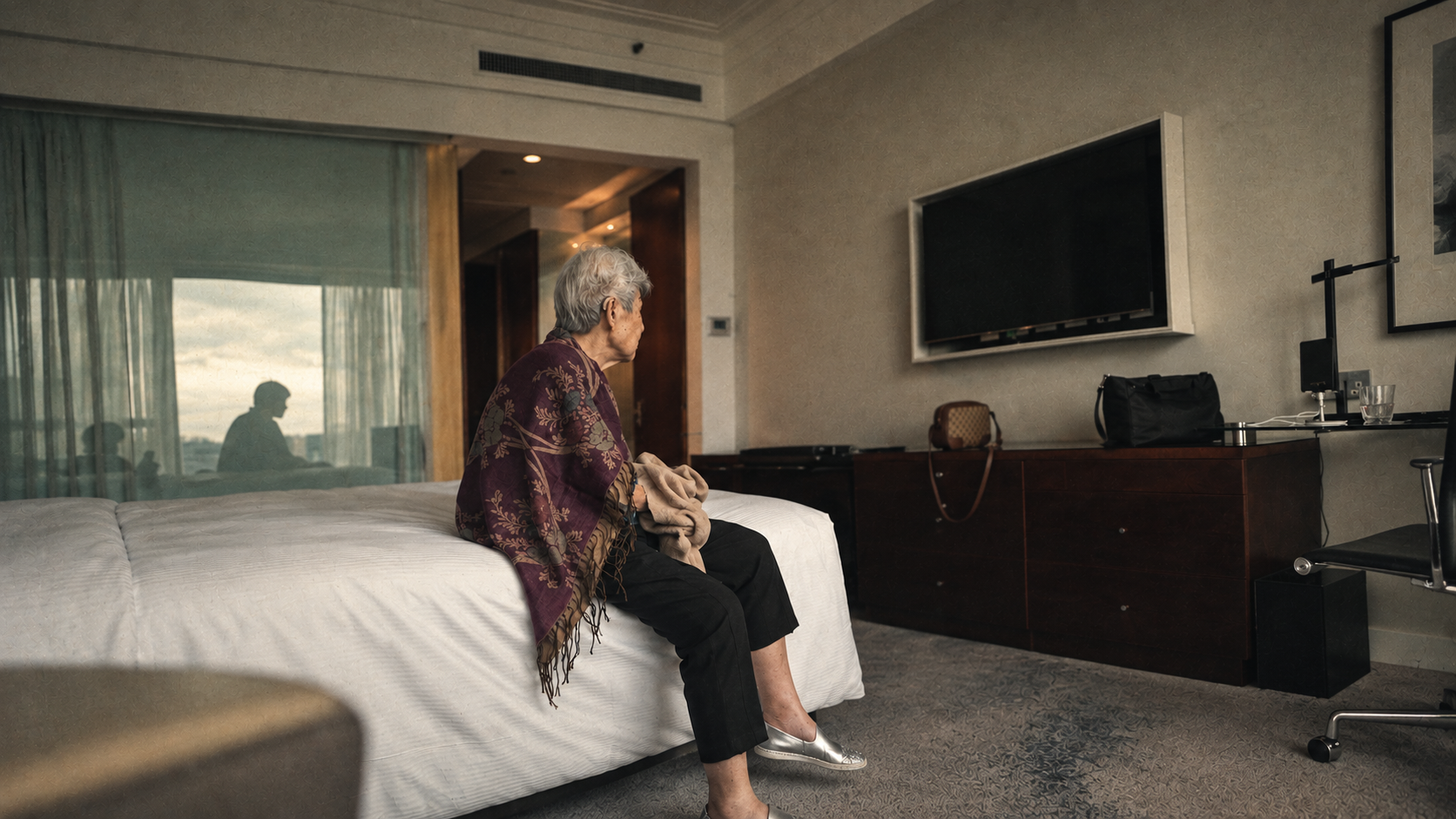
Never in my life did I imagine I would be navigating this reality: watching my mother slowly lose parts of herself to dementia.
It is a cruel disease because it doesn't happen all at once. Memories blur, logic stops landing, and someone you have known all your life begins experiencing the world very differently.
Every day is both a gift and a struggle.
I wrestle with guilt when I travel. I get frustrated when I come home late to incessant calls and the same questions repeated over and over. Dates, reasons, explanations — sometimes none of them register.
But life still has to go on. Hers, and mine. So instead of constantly fighting dementia, I am learning to work with what remains.
1. Routine becomes an anchor.
Memory may fade, but familiarity remains. Breakfast together, fixed days for walks or meals, familiar places and activities — these create a rhythm my mother can recognise even when she cannot remember why.
I've also learnt to prepare her for the times I will be away, so my absence doesn't feel sudden or frightening.
2. Don't fight her reality.
This is probably the hardest lesson. When she becomes confused or frustrated, correcting her rarely helps. Logic that makes perfect sense to me may mean nothing to her. Sometimes the better response is simply to listen, let the frustration pass and deal with one thing at a time.
Her confusion is real to her, even when it isn't my reality.
I've also stopped testing what she remembers. She may forget breakfast but remember a market we used to visit, songs from her youth or people she knew decades ago.
These memories are anchors too. Instead of focusing on everything dementia is taking away, I try to find what still lights her up — and meet her there.
3. Build support — and let go of some of the guilt.
No one can do this alone. I have a live-in helper, and there are days when she and my mother clash. When I travel, I now involve my sister more. Not because the helper isn't capable, but because I've realised familiar faces provide something competent care alone cannot.
I'm also learning to redefine what it means to ‘be there’.
Sometimes caregiving is a phone call before I board a flight. Sometimes it's making sure she knows when I'm coming home, or giving the helper enough information to reassure her when I'm away.
I cannot be beside her every hour of every day.
And caring for her should not require me to disappear too.
4. When words don't stick, make things visible.
One simple thing that has helped is creating visual reminders. I design cards showing the dates I'll be away, where I'm going and when I'll return. I print them and place them in plastic frames where she can easily see them.
When she becomes disorientated, she doesn't have to remember what I told her yesterday.
She can simply look.
Perhaps that is what caregiving has become for me: finding small anchors in a world that is becoming increasingly unfamiliar to her.
There is no version of this where I suddenly become endlessly patient, where the guilt disappears or where dementia becomes easy to accept.
But I'm learning to stop fighting so hard against what is disappearing and pay more attention to what is still here.
My mother is still here. And so am I.
And life continues — one breakfast, one familiar song, one phone call, one small anchor at a time.